A MUSICAL AUTOBIOGRAPHY

A LIFE
IN MUSIC.

Disco, funk, hip-hop and house. Tape machines, MPCs and DAWs. Five decades of love for music, the dancefloor and movement.

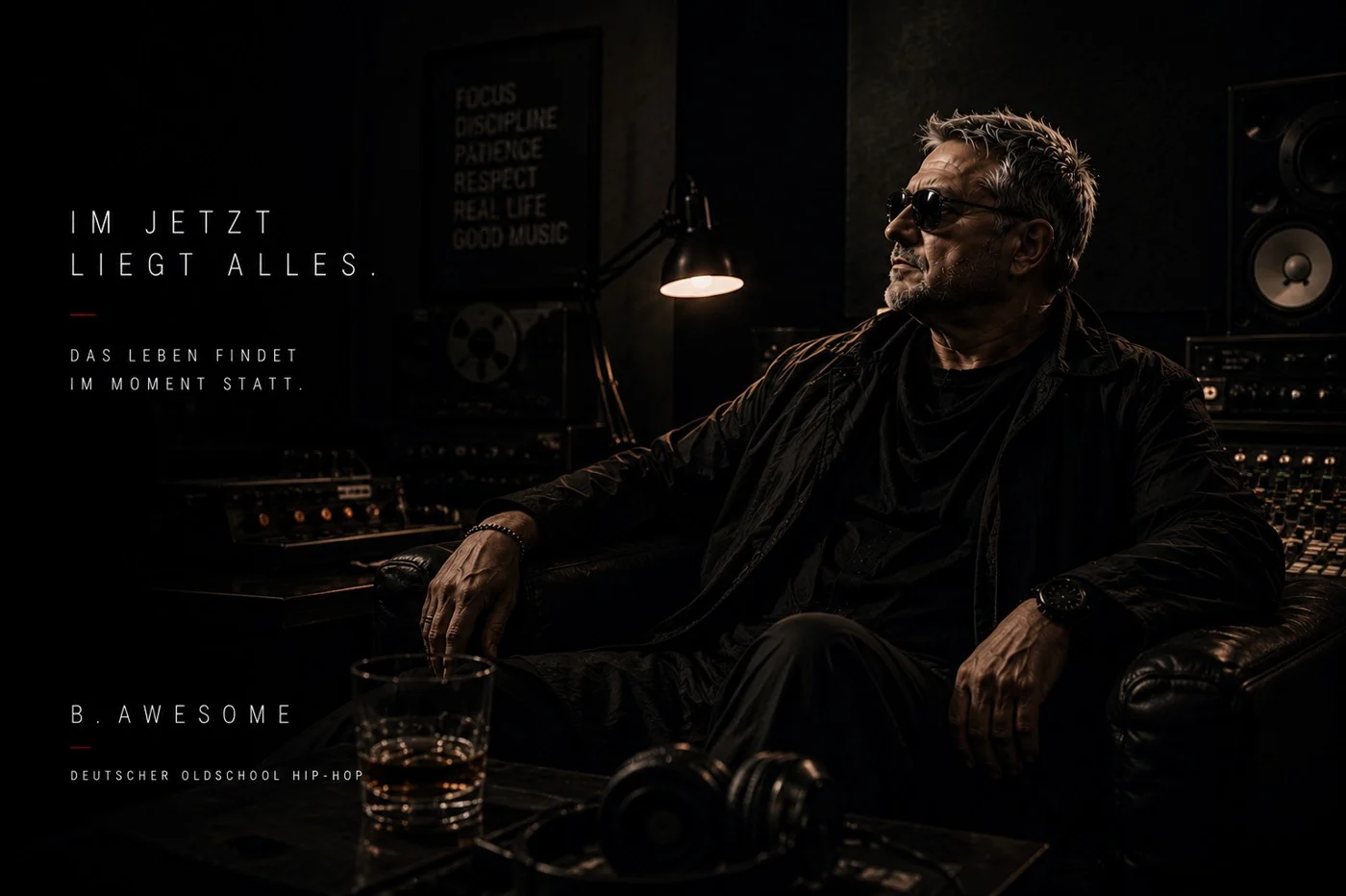
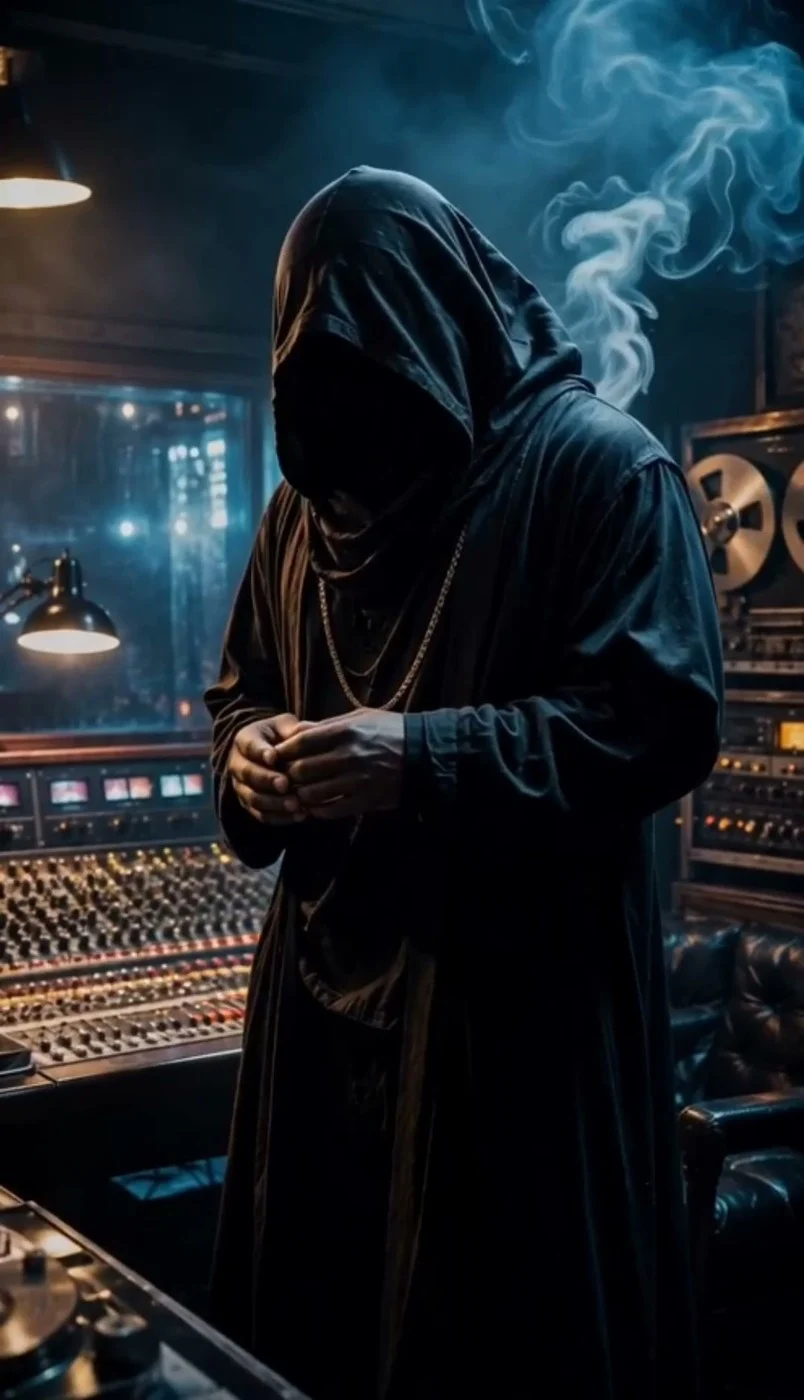
Born in the sixties, raised on the sound of the seventies, now over sixty and still on the dancefloor. Behind every artist of this label stands one creator: a lover of music, a jack of all trades between disco, funk, hip-hop and house. The name matters less than the groove.

DISCOVER THE JOURNEY
1970s → NOW
DISCO · FUNK · HOUSE · HIP-HOP · NEW TECHNOLOGY

FOUNDER / CREATIVE DIRECTION

The Creator

Producer · Curator · The mind behind every artist

Music found me before I knew what a groove was. The late seventies: Saturday Night Fever, the falsetto of the Bee Gees, Stayin’ Alive. Earth, Wind & Fire, Kool & the Gang, Stevie Wonder, Chic with Nile Rodgers’ unmistakable guitar, and Chaka Khan, whose I’m Every Woman pulled a whole generation onto the dancefloor and whose Ain’t Nobody became a song for eternity. I did not understand what was happening to me. I only knew that something inside me had started to move. It never stopped.

Then came funk. P-Funk, James Brown, The Temptations. Michael Jackson, who turned the dancefloor into the world’s stage, and above all Prince, that incomparable border crosser between funk, rock and soul. Basslines that land not in the ear but in the chest. Anyone who has felt their upper body fall onto the one all by itself knows what I mean. In that moment a bond forms between a person and the music that nobody needs to explain.

In the early eighties hip-hop reached Germany, with Kurtis Blow in our ears and the first B-Boys on linoleum and cardboard. I was right in the middle of it. I have stayed true to that culture: dozens of times I stood in the crowd, at The Notorious IBE in Heerlen, at Battle of the Year, at Red Bull BC One. Never as a competitor. Always as someone who knows what he is watching.

At the same time New York was writing club history. Larry Levan at the Paradise Garage. Frankie Knuckles, who carried that knowledge to Chicago, to the Warehouse that gave house music its name. From there a straight line runs to London’s Ministry of Sound, to Defected and to Glitterbox. To this day I stand on those dancefloors, at ADE in Amsterdam, at the Reeperbahn Festival in Hamburg. And to this day my body moves with it.

The nineties belonged to the great voices. R&B became elegant, warm and irresistible, carried by producers who shaped an entire decade: L.A. Reid and Babyface, Jimmy Jam and Terry Lewis. Every decade had its own highlights and its own direction. I took all of them with me.

I never just listened to music. I wanted to understand how it is made. Tape machines and large consoles, back when an edit was made with a blade in the splicing block and the tape was joined by hand. Then the digital turn: the first MPCs and beatmaking machines, Native Instruments, Cubase, Logic Pro, Ableton Live. Every new generation of tools expanded my craft. None replaced it.

Today I am over sixty and I move with the times, as I always have. Professionally I come from e-commerce and social media; technology was never my opponent but an instrument. We always work at the current state of the art and use the tools life puts in our hands. It was never either or. It is always both.

Every artist on this label carries a piece of me. Not everything happened exactly as it is told. But it is how I see the world. Anyone who has ever closed their eyes on a dancefloor will recognize it.

This label is not a business model and not an application for a global career. It is an attempt to pour a life into music: my view of things, my taste, the many facets of the music I love. Perhaps somewhere out there are a few people who feel the same. Who sense, in one song or another, what is meant without anyone having to explain it. If a small musical community grows from that, everything I wish for has been achieved.

Somewhere between smartphones, second screens and the silent years of the pandemic, many people forgot what happens on a dancefloor. That you do not film there, you feel. That strangers become one for a few minutes, simply because the same bass runs through all of them. Bringing that experience back is one of my deepest wishes.

In the end one question remains: what is happiness, really? Happiness has many faces, and most of them do not belong on this page. This is about a single facet: the happiness that music gives. For me it is the moment the groove kicks in and the thoughts grow quieter. When the body moves before the mind decides. When a stranger next to you feels the same thing without saying a word. To hold on to that moment and pass it on, that is the whole intention.

Verified LinkedIn profile will be linked here once confirmed.
THE MUSICAL LIFE STORY

FIVE DECADES.
ONE SOUNDTRACK.

More than a list of influences: the records, club cultures, technologies and sounds that accompanied a musical life, now reflected in the creative worlds of the label.

1970s01

THE FIRST SPARK

DISCO WAS THE DOOR.

Saturday Night Fever, the Bee Gees, Earth, Wind & Fire, Kool & the Gang, Stevie Wonder, Chic and Chaka Khan with I’m Every Woman and Ain’t Nobody. And the myth of New York nights, from Studio 54 to the Paradise Garage. The first love: the dancefloor.

1980s02

ON THE ONE

FUNK HITS THE CHEST.

P-Funk, James Brown, The Temptations, Michael Jackson and above all Prince. Basslines you do not hear but feel. When the upper body moves by itself, a bond is formed.

EARLY 1980s03

THE BIRTH OF THE B-BOYS

HIP-HOP ARRIVED IN GERMANY.

Kurtis Blow in our ears, the first B-Boys on linoleum and cardboard. Right in the middle of it: the roots of B.Awesome.

TO THIS DAY04

THE CIRCLE

SOMEONE WHO KNOWS WHAT HE SEES.

Dozens of times in the crowd: at The Notorious IBE in Heerlen, at Battle of the Year, at Red Bull BC One. Never as a competitor, always with all his heart.

1980s / 90s05

THE CLUB REVOLUTION

FROM THE GARAGE TO THE WAREHOUSE.

Larry Levan, Frankie Knuckles and the Chicago Warehouse, where house music got its name. Then Ministry of Sound, Defected and Glitterbox: the line that leads to Theo Nostos.

1990s06

THE GREAT VOICES

R&B WITH SOUL AND SHINE.

The decade of the great voices, shaped by producers such as L.A. Reid and Babyface, Jimmy Jam and Terry Lewis. Every decade had its highlights, every one left its mark.

THE CRAFT07

FROM TAPE TO DAW

THE TOOLS OF EVERY ERA.

Tape machines, large consoles, edits made with a blade and tape spliced by hand. Then MPCs, beatmaking machines, Native Instruments, Cubase, Logic Pro and Ableton Live.

TODAY08

BOTH, NOT EITHER

ALWAYS UP TO DATE.

Over sixty and still curious. We work at the current state of the art and use the tools life puts in our hands. Never either or.

AFTER THE PANDEMIC09

BACK TO THE DANCEFLOOR

FEEL, DON’T FILM.

Between smartphones, second screens and the silent years of the pandemic, people lost what happens on a dancefloor. Bringing it back is one of the deepest wishes behind this label.

THE INTENTION010

NOT A MACHINE

A COMMUNITY, NOT A BUSINESS.

No profit motive, no global career. Only the wish to pour a life into music and to find people who feel the same while listening: the facet of happiness that music gives, and the movement that touches you.

ALWAYS011

THE STORIES

FELT, NOT NECESSARILY LIVED.

Every artist carries a piece of his own life. Not everything happened exactly like this. But it is how he sees the world.

THE EVOLUTION OF SOUND

THE FORMATS CHANGED.
SO DID THE TOOLS.

Three intertwined journeys shaped this musical autobiography: how music was released and heard, how DJs brought it to life on the dancefloor, and how producers made it in the studio. The medium and equipment kept changing; curiosity and musical judgment developed with them.

SIDE A / THE LISTENER

FROM THE RECORD SHOP TO EVERYWHERE.

01 / THE SINGLE · 1970s

7-INCH. 45 RPM. THE FIRST SPARK.

The little seven-inch single was more than a record. For a teenager discovering the Bee Gees, The Trammps and disco, it was a doorway into a lifelong relationship with music.

02 / THE EXTENDED MIX · LATE 1970s–1980s

12-INCH. MORE ROOM FOR THE GROOVE.

The twelve-inch maxi single became a defining format for disco DJs and house culture, with extended mixes, longer intros, deeper bass and space for the dancefloor. Some played at 45 RPM, others at 33⅓ RPM.

03 / THE DIGITAL DISC · 1980s–1990s

THE CD CHANGED THE LISTENING EXPERIENCE.

The compact disc transformed how music was collected, discovered and heard, while studio technology was also entering the digital era.

04 / MUSIC EVERYWHERE · 2000s–TODAY

FILES. DOWNLOADS. STREAMING.

Music moved from shelves to hard drives, then to platforms and playlists. Access changed dramatically, but the search for a track worth hearing again did not.

SIDE B / THE STUDIO

FROM THE CUTTING BLADE TO THE CURSOR.

01 / PHYSICAL SOUND · THE ANALOG ERA

CONSOLES, MULTITRACK TAPE AND THE EDITING BLADE.

Recording once revolved around large desks, outboard equipment and magnetic tape. Editing could mean physically cutting and splicing tape. This is part of the production history behind the music he grew up with.

02 / NEW PRECISION · THE DIGITAL TRANSITION

FROM TAPE TO DIGITAL MULTITRACK.

Digital recording and non-destructive editing transformed how producers could arrange, revise and experiment. Sound moved increasingly from physical media to digital workflows.

03 / THE STUDIO ON A SCREEN · THE DAW ERA

ABLETON LIVE. LOGIC PRO. CREATIVE FREEDOM.

Computer-based production tools brought arranging, editing, sound design and mixing into increasingly flexible digital workspaces. Musical ideas could travel further with fewer technical barriers.

04 / THE STATE OF THE ART · TODAY

NEW TOOLS. THE SAME EAR.

New tools arrive, proven ones remain. It was never either or, always both. Experience, selection and taste decide what becomes music.

SIDE C / THE DJ BOOTH

FROM NEEDLE DROP
TO DIGITAL DECKS.

From manually cueing vinyl and riding the pitch fader to preparing digital tracks for a club-ready USB library: the DJ booth evolved into a powerful creative instrument. The art remained choosing the right record, finding the transition and understanding the room.

01 / THE VINYL BOOTH · 1970s

TWO TURNTABLES. ONE DANCEFLOOR.

The DJ booth was physical: seven-inch singles, twelve-inch club records, turntables, headphones and a mixer. Cueing, timing and transitions were performed by ear and by hand.

02 / THE CLUB STANDARD · 1979 → 1990s

TECHNICS SL-1200MK2 / SL-1210MK2.

Introduced in 1979, the direct-drive MK2 with pitch control helped define the vinyl DJ workflow. In the eighties and nineties, the Technics decks became enduring icons of disco, house and hip-hop culture.

03 / THE CDJ ARRIVES · 1994 → 2000s

FROM VINYL TO THE CD DECK.

Pioneer introduced the CDJ-500 in 1994. Later players such as the CDJ-1000 brought more vinyl-like performance techniques to a CD-based booth while physical records and CDs continued to coexist.

04 / THE DIGITAL LIBRARY · 2000s → 2010s

MP3. USB. REKORDBOX.

Digital audio files, CDJs with USB support and the 2009 CDJ-2000 / rekordbox workflow changed the way DJs carried, organized and prepared their music. The record bag increasingly became a digital library.

05 / THE CONNECTED BOOTH · TODAY

CONTROLLERS. SOFTWARE. NEW FREEDOM.

Today, club players, laptops, controllers and DJ software offer flexible ways to perform, remix and build a musical journey. The equipment has evolved, but selection, rhythm and the connection with an audience remain essential.

Half a century of records, dancefloors, DJ booths and studios. A lifetime of growing musical understanding. The technology keeps evolving. The ear behind the music evolves with it.

THREE ARTISTS. THREE CHAPTERS OF ONE MUSICAL LIFE.

THREE SOUNDS.
ONE CREATIVE THREAD.

THE CREATIVE PHILOSOPHY

“Music gives its own facet of happiness: the moment the groove kicks in and the thoughts grow quieter. If just one person out there feels that while listening, every song has been worth it.”

The artists of Pocket Funk Collective are virtual characters with worlds of their own. They do not claim live performances or collaborations with the musicians named here as influences.